
Lancaster County Divorce Records Access
Lancaster County divorce records are filed and maintained by the Prothonotary's Office at the Lancaster County Courthouse. As one of Pennsylvania's most populous counties, Lancaster generates a significant volume of court activity. The Court of Common Pleas presides over all divorce proceedings filed in the county, and the records that result are part of the public court file. This page explains where Lancaster County divorce records are held, how to search for them online and in person, and what Pennsylvania law requires of those filing for divorce in this county.
Lancaster County Quick Facts
Lancaster County Divorce Records and the Prothonotary's Office
The Prothonotary's Office serves as the official clerk of the Lancaster County Court of Common Pleas, maintaining all civil court records including divorce filings. When a divorce case is initiated, the Prothonotary assigns a docket number and creates the case file. All documents submitted by either party, and all actions taken by the court, are entered into this record.
Lancaster County is governed by an elected Board of Commissioners. The current Board includes Ray D'Agostino as Chairman, Joshua Parsons as Vice Chairman, and Alice Yoder as Commissioner. County government information, department contacts, and public services are accessible through the Lancaster County official website.
The official county site provides pathways to various county offices and services. For those with questions specific to divorce record access, the Prothonotary's Office maintains a Prothonotary FAQ page addressing common questions about filings, copies, and court procedures.
Note: The FAQ page covers basic procedural questions. For complex or contested cases, consulting an attorney is recommended.
Searching Lancaster County Divorce Records Online
Several online resources are available for searching Lancaster County divorce records. The primary tool is the Pennsylvania UJS Case Search portal, which indexes civil court cases statewide. Lancaster County cases are included in this system. Users can search by party name or docket number without needing to create an account.
The Pennsylvania Unified Judicial System maintains the portal and updates case information as records are processed by county courts. Docket sheets, listing all filings and actions, are available for most active and recently closed cases.
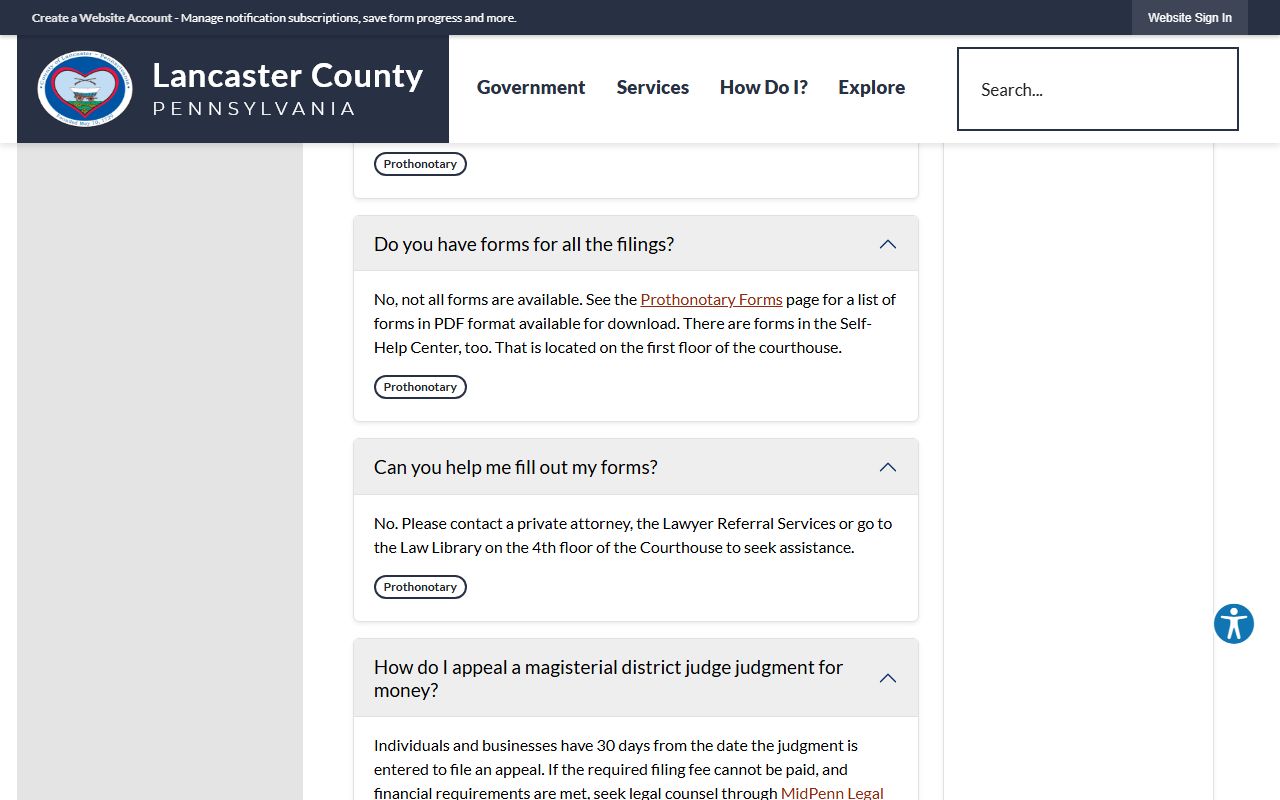
The Lancaster County Prothonotary FAQ provides guidance on what records are available, how to request copies, and what fees may apply. Reviewing this resource before contacting the office or visiting in person can save time and clarify what to expect.
For broader access to public court information and records, the Lancaster County public records portal offers additional pathways to court filings and related documents.
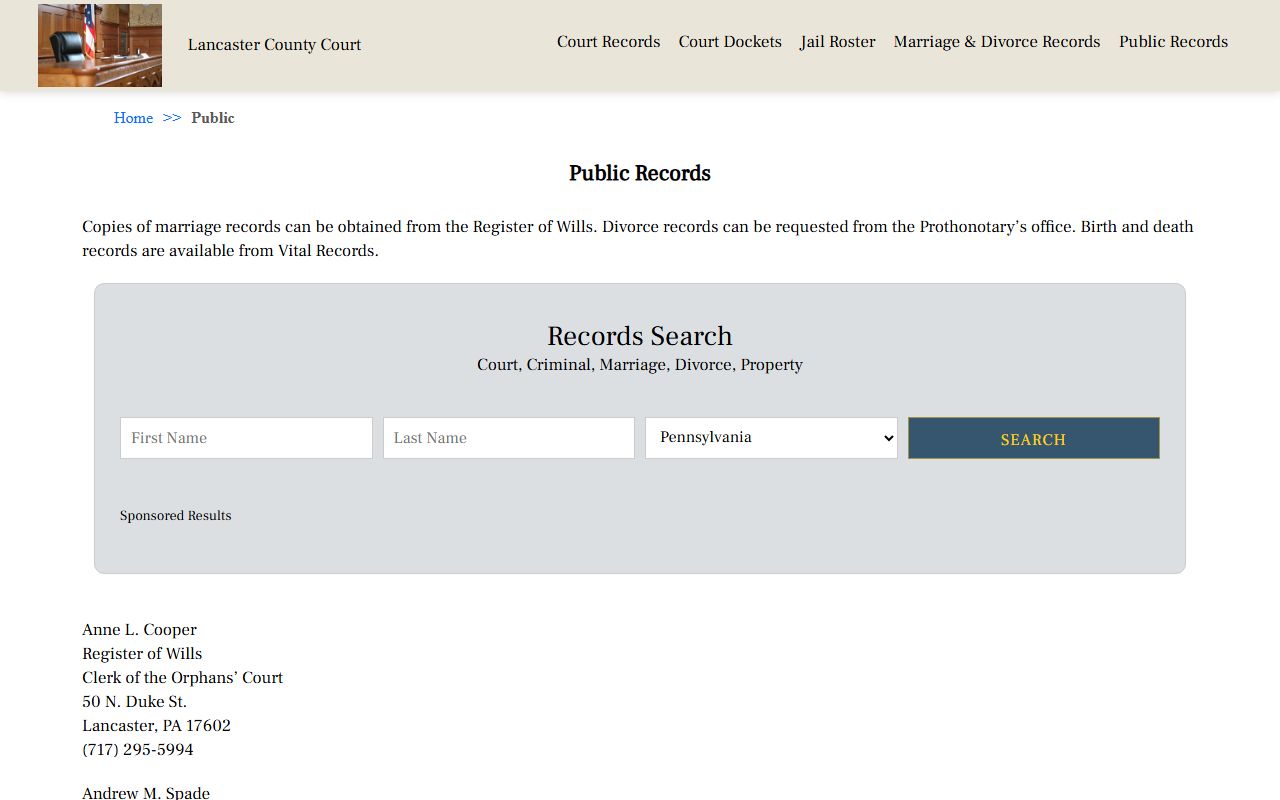
Between the UJS statewide portal, the county Prothonotary FAQ, and the local public records site, Lancaster County offers more online access to court record information than many smaller Pennsylvania counties.
Pennsylvania Divorce Law and Lancaster County Filings
Pennsylvania's divorce laws apply equally across all 67 counties. Lancaster County filers are subject to the same requirements as anyone filing elsewhere in the state.
Residency is required before filing. Under 23 Pa.C.S. § 3104, at least one spouse must have lived in Pennsylvania for six months prior to initiating the case. This threshold is met by most Lancaster County residents who have established their home here.
Grounds for divorce under 23 Pa.C.S. § 3301 include both no-fault and fault-based options. The no-fault path is most commonly used. Mutual consent divorce can proceed after both parties sign affidavits following a 90-day waiting period. Irretrievable breakdown based on one year of separation is the alternative no-fault ground. Fault grounds such as adultery, desertion, and cruel treatment remain available under Pennsylvania law. Detailed procedural rules are in Chapter 1920 of the Pennsylvania Code.
Property division in Lancaster County follows the equitable distribution standard of 23 Pa.C.S. § 3502. The statute directs courts to divide marital property fairly, though not necessarily equally. Alimony considerations are addressed separately under 23 Pa.C.S. § 3701. The full text of Title 23 is available through the Pennsylvania Legislature's website.
Note: This page provides general legal information, not legal advice. Contact a licensed Pennsylvania attorney for guidance on your specific case, or reach out to Pennsylvania Legal Aid if you may qualify for assistance.
Lancaster County Divorce Records and Public Access
Divorce records filed with the Lancaster County Court of Common Pleas are generally public. Pennsylvania's Right-to-Know Law, 65 P.S. § 67.101, establishes the framework for public access to government records. Most documents in a divorce case file fall within this category, with limited exceptions for sealed materials and sensitive information involving children.
The Pennsylvania Office of Open Records oversees the Right-to-Know Law and can provide guidance when access to specific records is denied or unclear. For vital records maintained separately from court files, the Pennsylvania Department of Health manages divorce certificate data. The courthouse and the health department maintain distinct records for different purposes.
Information on how Pennsylvania tracks divorce statistics at the population level is available through the CDC's Pennsylvania vital records page. This is relevant for researchers working with demographic data rather than individual case documents.
The Pennsylvania Court Records divorce page offers a statewide overview of how divorce records are organized and accessed across all counties.
Lancaster County Divorce Records and the County's Character
Lancaster County is among Pennsylvania's most distinctive counties. Known for its agricultural heritage, its vibrant farming communities, and the presence of the Plain communities including the Old Order Amish, the county combines rural tradition with a growing urban center. The city of Lancaster serves as the county seat and as a regional hub for commerce, arts, and government.
The county's population of roughly 560,000 places it among the most populous in Pennsylvania. This scale means the Lancaster County Court of Common Pleas handles thousands of civil cases annually, including a significant volume of divorce proceedings. The courthouse in Lancaster city is well-equipped to manage this workload, and the Prothonotary's Office maintains an extensive collection of both recent and historical records.
The Pennsylvania Courts of Common Pleas page explains the structure and role of trial courts across the state. Lancaster County's court operates within this framework, handling all family law matters for residents across the county's many townships, boroughs, and municipalities.
Cities in Lancaster County
The city of Lancaster is the county seat and the largest urban center, home to county government, the courthouse, and a diverse range of cultural and economic activity. Beyond the city, Lancaster County includes Ephrata, Elizabethtown, Lititz, Manheim, and Columbia, along with dozens of townships and rural communities that reflect the county's agricultural heritage. Residents from across the county, whether in the city or in the rural townships surrounding Amish communities and farmland, file divorce cases with the Court of Common Pleas located in the city of Lancaster.
Nearby Counties
Lancaster County shares borders with several major southeastern Pennsylvania counties, each maintaining its own Court of Common Pleas for divorce filings.