
Berks County Divorce Records Lookup
Berks County divorce records are maintained at the Berks County Courthouse in Reading, Pennsylvania, the county seat and one of the largest cities in the state. With a population of approximately 430,000 residents, Berks County is a substantial southeastern Pennsylvania county, and its Court of Common Pleas processes a significant volume of divorce cases annually. The Prothonotary's Office at the Berks County Courthouse is the official custodian of all civil court records, including divorce complaints, motions, orders, and final decrees. This page explains how to find and request Berks County divorce records through the courthouse and through the free statewide Pennsylvania UJS Portal.
Berks County Quick Facts
Berks County Court of Common Pleas and Prothonotary
The Berks County Court of Common Pleas is the trial court of general jurisdiction serving Reading and all of Berks County. Under Pennsylvania's court structure, the Court of Common Pleas handles all divorce proceedings filed within the county. The Prothonotary's Office serves as the civil court clerk, accepting divorce filings, assigning docket numbers, maintaining case files, and issuing certified copies of court documents upon request.
The Berks County Courthouse in Reading is where all divorce records for the county are housed and accessible. The Prothonotary maintains both current cases and historical records for the county's civil dockets. When requesting Berks County divorce records, contacting the Prothonotary directly is the most efficient approach. Requests for certified copies should include the names of both parties, the docket number if known, and the approximate filing date to help staff locate the correct case file.
Berks County's size means the Prothonotary's Office handles a substantial volume of civil cases, including a large number of divorce filings each year. Despite this volume, the office provides records access services to members of the public and researchers during regular courthouse business hours. The Pennsylvania Courts of Common Pleas page provides context on how Berks County's court fits into the broader statewide judicial system.
The Pennsylvania Unified Judicial System portal provides free online access to Berks County divorce case dockets, covering cases filed in the Court of Common Pleas in Reading.
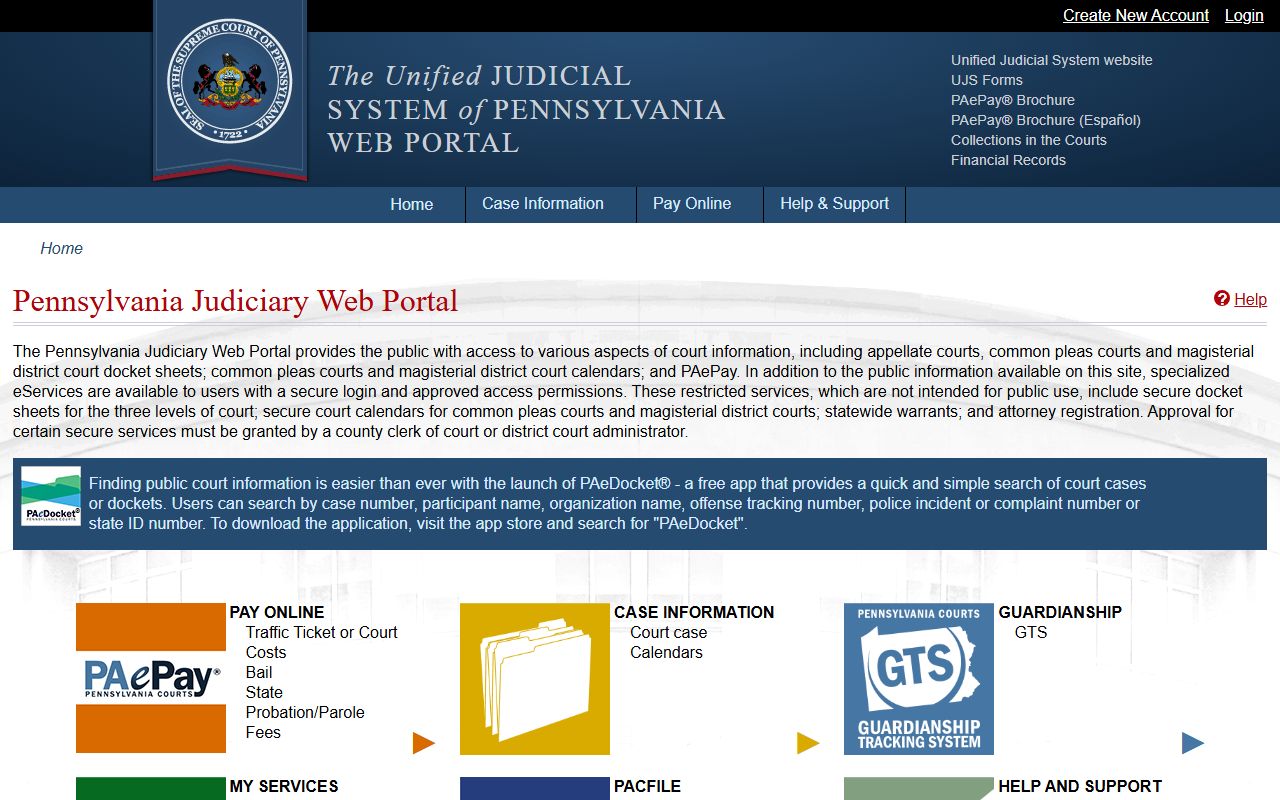
The statewide UJS system at ujsportal.pacourts.us allows anyone to search Berks County divorce cases by name or docket number without a courthouse visit or any registration requirement.
Searching Berks County Divorce Records Through the UJS Portal
The most accessible starting point for finding Berks County divorce records is the Pennsylvania UJS Case Search portal. This free statewide tool allows searches of all Pennsylvania county courts, including the Berks County Court of Common Pleas. Entering a party's name and selecting Berks County returns a list of matching divorce cases with their docket numbers and filing dates.
Once you locate the correct Berks County divorce case in the portal, clicking the docket number reveals the full case history. The docket includes every filing, order, and court event in the case from initiation to final decree. Some documents are available for direct online viewing within the portal. Others require a formal request to the Berks County Prothonotary for printed or certified copies.
The UJS portal is maintained by the Pennsylvania court system and is free for all users. There is no charge to search case dockets or view summary information. Fees only apply when requesting physical copies from the courthouse. For researchers needing to verify a Berks County divorce without obtaining copies, the portal often provides sufficient case information.
Note: The UJS portal covers cases entered into the digital system within a certain date range. Older Berks County divorce cases may require an in-person search at the Berks County Courthouse in Reading.
Berks County Divorce Records: Contents and Types
When a divorce is filed in Berks County, the Court of Common Pleas creates a case file that grows throughout the proceeding. The divorce complaint is the first document, stating the grounds for divorce and identifying the parties. If the other spouse responds, that answer becomes part of the record. As the case progresses, additional filings accumulate: motions, affidavits, financial disclosures, hearing notices, and interim court orders all form part of the Berks County divorce record.
Property division is addressed under 23 Pa.C.S. § 3502, which governs equitable distribution of marital assets. Alimony matters fall under 23 Pa.C.S. § 3701. When the parties agree on financial terms, their settlement agreement is often incorporated into the divorce decree and becomes a permanent part of the public record. The final divorce decree, entered by the judge, is the document that legally ends the marriage and is the most frequently requested item from the Berks County Prothonotary.
Certified copies of Berks County divorce decrees are required for a range of legal purposes. Name change petitions, estate matters, and some administrative agency submissions require certified court copies with the official seal. The Berks County Prothonotary charges fees for certified copies on a per-page basis. Uncertified informational copies are available at lower cost for non-legal uses.
For a general overview of what Pennsylvania divorce records contain, Pennsylvania Court Records' divorce information page explains the typical contents of divorce case files across the state.
Filing for Divorce in Berks County
Divorce proceedings in Berks County begin at the Prothonotary's Office, where the filing party submits a divorce complaint and pays the required filing fee. Pennsylvania law at 23 Pa.C.S. § 3104 requires that at least one spouse must have resided in Pennsylvania for a minimum of six months before a divorce complaint can be accepted. Once filed, the Prothonotary issues a docket number and the case enters the court's civil calendar.
Pennsylvania's no-fault divorce grounds under 23 Pa.C.S. § 3301 are the most commonly used in Berks County. Mutual consent no-fault divorce allows the case to proceed once both parties sign consent affidavits, which can be submitted no sooner than 90 days after service of the divorce complaint. If mutual consent is unavailable, the petitioner may seek divorce based on irretrievable breakdown of the marriage, which requires demonstrating at least one year of continuous separation. Both no-fault paths lead to the same final divorce decree from the Court of Common Pleas.
The procedural framework for all Berks County divorce cases is established by Chapter 1920 of the Pennsylvania Rules of Civil Procedure. These statewide rules govern required forms, service timelines, and hearing procedures. Berks County may have local supplemental rules that apply within the jurisdiction. Both sets of rules are available at the courthouse law library in Reading.
Right-to-Know and Public Access to Berks County Divorce Records
Berks County divorce records held by the Court of Common Pleas are generally public court records accessible under Pennsylvania's judicial access policies. Pennsylvania's Right-to-Know Law at 65 P.S. § 67.101 applies to executive branch agencies, while court records fall under the authority of the judicial branch. As a result, requests for Berks County divorce court records go to the Prothonotary, not through the executive branch open records process.
The Pennsylvania Office of Open Records administers the Right-to-Know Law for state and local executive branch agencies and provides educational resources about public records access in the state. Its website is useful for understanding Pennsylvania's open records framework, even though the Office does not handle court record requests directly. For Berks County court records, the Prothonotary is the correct contact.
The Pennsylvania Office of Open Records provides guidance on public access to government records across the state, reflecting Pennsylvania's commitment to transparency in government operations.
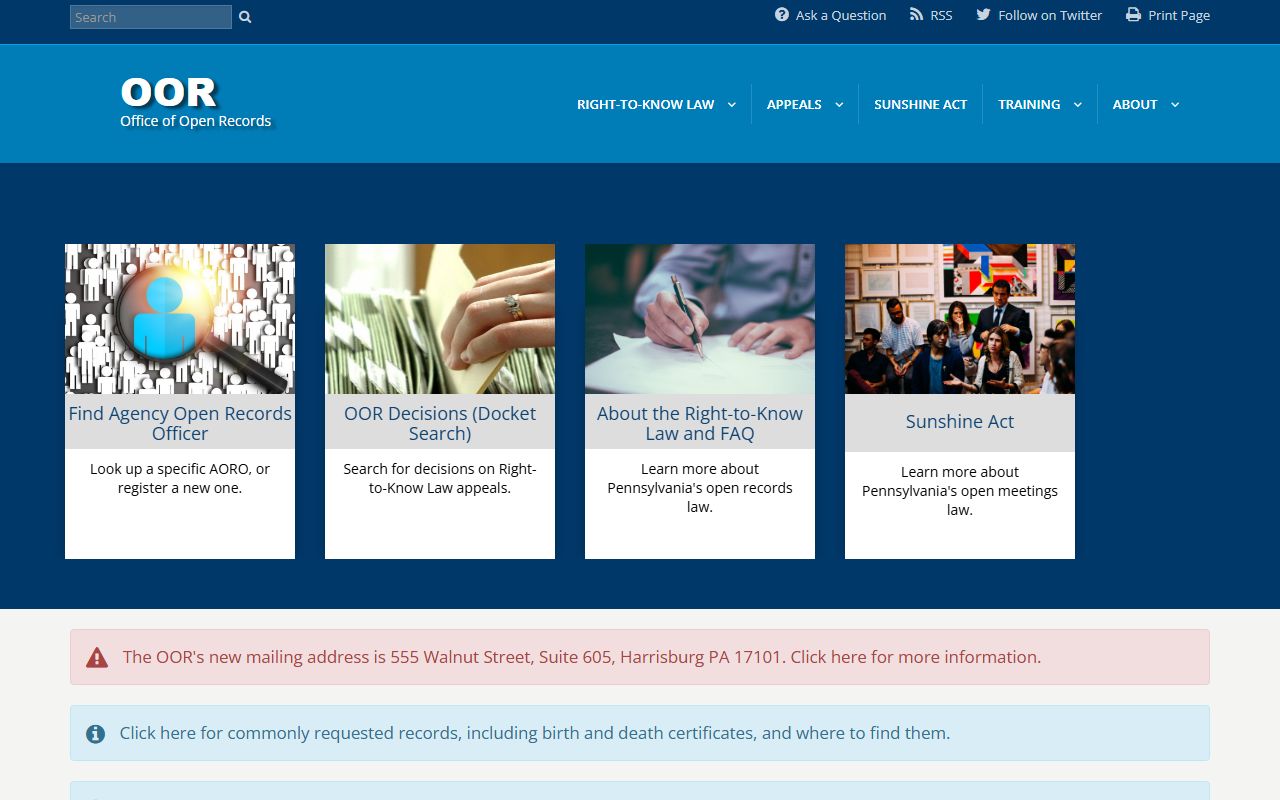
While the Office of Open Records handles executive branch records, its resources provide helpful background on Pennsylvania's broader public records philosophy, which also informs how court records like Berks County divorce filings are treated under judicial access policies.
Certain portions of Berks County divorce files may be restricted. Documents containing sensitive financial data, records involving minor children, or materials subject to a protective order may not be available for public inspection. The Prothonotary's staff can advise on which portions of a given file are accessible when a specific request is made.
Berks County Divorce Decrees and State Vital Records
Two types of official documents confirm that a divorce was finalized in Berks County. The Berks County Prothonotary issues certified copies of court-entered divorce decrees. Separately, the Pennsylvania Department of Health maintains a statewide vital records registry that includes divorce certificates. These serve different purposes and come from different agencies.
To request a state-issued divorce certificate for a Berks County divorce, contact the Pennsylvania Department of Health's vital records office. The DOH maintains records from a defined registration start date; for very old divorces, only the courthouse record may exist. The CDC's vital records resource page for Pennsylvania offers guidance on obtaining Pennsylvania divorce certificates from both state and county sources.
Legal Assistance for Berks County Divorce Matters
PA Legal Aid serves Berks County residents who qualify for free legal assistance. The organization provides representation and advice on family law matters including divorce, with offices serving southeastern Pennsylvania. Income-qualifying residents in Reading and throughout Berks County can contact PA Legal Aid for help navigating divorce proceedings or understanding how to access divorce records.
The Berks County Courthouse law library in Reading is available to self-represented parties researching Pennsylvania divorce law. The library maintains Pennsylvania statutes including Title 23 of the Domestic Relations Code, local court rules, and practice materials. Prothonotary staff provide procedural information to members of the public but do not give legal advice. Attorneys familiar with Berks County Court of Common Pleas procedures are the appropriate resource for contested divorce matters requiring legal representation.
Cities in Berks County
Berks County is home to Reading, the county seat and Pennsylvania's fourth largest city, along with numerous boroughs and townships. Communities including Kutztown, Boyertown, Pottstown, Wyomissing, Sinking Spring, Fleetwood, and Hamburg are all part of Berks County. Regardless of which municipality a resident lives in, divorce cases are filed at the Berks County Courthouse in Reading.
Nearby Counties
Berks County borders several other eastern and south-central Pennsylvania counties, each with their own Court of Common Pleas maintaining separate divorce records.