
Lehigh County Divorce Records Online
Lehigh County divorce records are filed and maintained by the Prothonotary's Office at the county courthouse in Allentown, Pennsylvania. Located in the heart of the Lehigh Valley in southeastern Pennsylvania, Allentown is the third-largest city in the state and the county seat of Lehigh County. The Court of Common Pleas presides over all divorce proceedings in the county, and the resulting case documents form part of the permanent public court record. This guide explains how to find Lehigh County divorce records, what they contain, and how Pennsylvania law shapes the divorce process for those filing in this county.
Lehigh County Quick Facts
Lehigh County Divorce Records and the Prothonotary
The Prothonotary's Office in Allentown is the custodian of civil court records for Lehigh County. Every divorce case filed in the county is assigned a docket number, and all related documents, including complaints, affidavits, orders, and the final decree, are maintained by this office. The records are part of the public court system and are generally accessible to anyone who requests them.
Lehigh County government services, department contacts, and public resources are available through the Lehigh County official website. The site provides access to a range of county services. Notable features include online payment options for current tax bills, with the county accepting credit cards, debit cards, and eChecks. A Volunteer Firefighter Real Estate Tax Credit program is administered through the county as well. The county also facilitates online payments for Nursing Home Resident accounts.
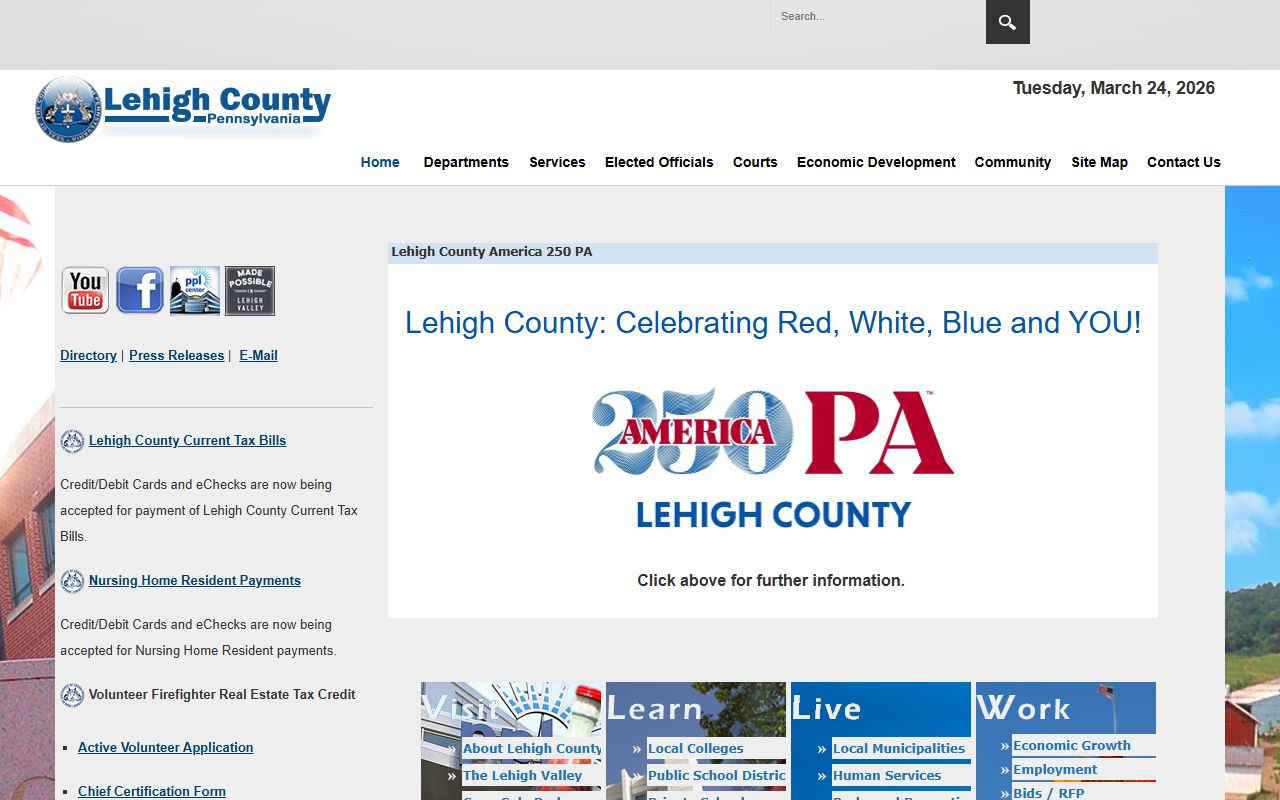
For divorce record inquiries specifically, the Prothonotary's Office is the correct contact. The county website provides phone numbers, addresses, and office hours for all county departments including the courthouse offices in Allentown.
Note: Tax payment and financial services on the county website are separate from court record access. For divorce records, use the Prothonotary or the UJS portal.
Searching Lehigh County Divorce Records Through the UJS Portal
The Pennsylvania UJS Case Search portal is the fastest way to find Lehigh County divorce records online. This free, publicly available system indexes civil court cases from all Pennsylvania counties, including Lehigh. Searches can be conducted using a party's name or a known docket number.
Results from the portal include the names of both parties, the docket number, the filing date, and the current status of the case. A link to the full docket sheet provides a chronological listing of every document filed and every action taken. This is useful for preliminary research before requesting physical copies from the courthouse.
The Pennsylvania Unified Judicial System portal is updated as courts process new filings. Lehigh County's caseload, reflecting a county with nearly 380,000 residents, is substantial, and the portal indexes a large number of active and closed cases.
For documents not available through the portal, or for certified copies of decrees needed for legal transactions, visiting the Prothonotary's Office in Allentown remains an option. Staff can assist with locating older records and providing certified document copies as requested.
Pennsylvania Divorce Law and Lehigh County Cases
Pennsylvania divorce law is uniform across the state. Lehigh County residents filing for divorce are subject to the same rules as anyone filing in any of the other 66 Pennsylvania counties.
Before a case can be filed, residency must be established. Under 23 Pa.C.S. § 3104, at least one party to the marriage must have been a Pennsylvania resident for at least six months. Lehigh Valley residents who have lived in the county for this period can file at the courthouse in Allentown.
Grounds for divorce are defined in 23 Pa.C.S. § 3301. The no-fault path is most commonly used. Mutual consent divorce can proceed after both parties sign the required affidavits, with the case eligible for a final decree after a 90-day waiting period. A divorce based on irretrievable breakdown requires one year of separation before the court can act. Fault grounds, including adultery, desertion, and other specified conduct, remain available under Pennsylvania law. The detailed rules governing divorce procedure are found in Chapter 1920 of the Pennsylvania Code.
Property division is handled under the equitable distribution standard of 23 Pa.C.S. § 3502. Courts weigh many factors in determining what is equitable, including the length of the marriage, the age and health of both parties, and each party's economic circumstances. Alimony, if at issue, is addressed under 23 Pa.C.S. § 3701. The full statute is available at the Pennsylvania Legislature's website.
Note: This page is for general informational purposes. Contact a licensed Pennsylvania attorney for legal advice, or reach out to Pennsylvania Legal Aid if you may qualify for assistance.
What Lehigh County Divorce Records Contain
A Lehigh County divorce case file contains the documents submitted by each party and the orders and decrees issued by the court. The size of the file depends entirely on the nature of the case.
A mutual consent divorce that concludes without disputes may contain only a complaint, the required affidavits, and the final decree. A contested divorce involving property division, alimony claims, or ancillary matters will generate a much larger file. Such cases may include multiple motions, responses, hearing notices, court orders, and a detailed written settlement agreement if one was reached.
The final divorce decree is the document most often requested by members of the public. It is the official court order dissolving the marriage and is typically required for legal name changes, updating financial accounts, and entering a new marriage. Certified copies are available from the Prothonotary's Office in Allentown upon request.
Background on how divorce case records are structured across Pennsylvania is available at Pennsylvania Court Records. For statewide and national divorce data, the CDC's Pennsylvania vital records page provides statistical context.
Public Access to Lehigh County Divorce Records
Divorce records in Lehigh County are generally open to the public. Pennsylvania's Right-to-Know Law, 65 P.S. § 67.101, establishes the right to access government records, including court filings. Most documents in a divorce file fall within the definition of public records, with limited exceptions for sealed orders, protective orders, or documents involving minor children that the court has restricted from public view.
The Pennsylvania Office of Open Records oversees the Right-to-Know process and can advise when disputes about record access arise. Vital records maintained by the state health department are a separate category. The Pennsylvania Department of Health manages divorce certificate data for statistical and vital records purposes, distinct from the court records held by the Prothonotary.
The Pennsylvania Courts of Common Pleas page provides further context on the structure and jurisdiction of Pennsylvania's trial courts, including the Lehigh County court in Allentown.
Allentown, the Lehigh Valley, and Lehigh County Family Court
Allentown is Pennsylvania's third-largest city and the hub of the Lehigh Valley region. The city serves as the county seat of Lehigh County and is home to the county courthouse, where all family law matters are heard by the Court of Common Pleas. The Prothonotary's Office, located within the courthouse complex, manages all civil case records for the county.
Lehigh County's location in southeastern Pennsylvania, just west of the Poconos and northeast of Philadelphia, makes it one of the more densely populated counties in the state. With nearly 380,000 residents, the county generates a large volume of court activity across all case types. The Lehigh Valley region, which includes both Lehigh and neighboring Northampton County, is a significant economic and population center in Pennsylvania.
Residents filing for divorce in Lehigh County benefit from a well-staffed courthouse with established procedures for handling the volume of cases the region generates. Those unfamiliar with the process can find guidance through the official county website or the state courts portal.
Cities in Lehigh County
Allentown is the county seat and by far the largest city in Lehigh County, serving as the center of government, business, and culture for the Lehigh Valley region. Other communities in Lehigh County include Bethlehem, which straddles both Lehigh and Northampton counties, as well as Emmaus, Catasauqua, Whitehall, and Macungie. These municipalities and the surrounding townships collectively make up a county with nearly 380,000 residents, all of whom file divorce proceedings at the Court of Common Pleas located in Allentown.
Nearby Counties
Lehigh County is surrounded by several southeastern and central Pennsylvania counties, each with its own Court of Common Pleas for divorce filings.