
Erie Pennsylvania Divorce Records
Erie is the county seat of Erie County and one of Pennsylvania's largest cities, with a population of approximately 97,000. The city sits on the southern shore of Lake Erie, making it Pennsylvania's only major port city on the Great Lakes. Divorce records for Erie residents are maintained by the Prothonotary's Office at the Erie County Courthouse. All divorce proceedings are handled by the Erie County Court of Common Pleas. This guide explains how to find, request, and understand divorce records in Erie.
Erie Quick Facts
Erie Divorce Records and the County Court System
Erie County operates under a Home Rule Charter. County Executive Christina Vogel leads the county government, with support from an elected County Council. This structure differs from the commissioner-led model used in most Pennsylvania counties, but the judicial system functions identically. The Erie County Court of Common Pleas has jurisdiction over all family law matters for city and county residents alike.
The Prothonotary's Office at the Erie County Courthouse is the official custodian of civil court records. All divorce filings, orders, hearing schedules, and final decrees are maintained there. The courthouse is located within the city, making in-person access straightforward for Erie residents.
The Erie County Courts website provides contact information, court schedules, and procedural guidance for parties navigating the family division. For county-level information beyond the courts, the Erie County government website covers the full range of county services and departments.
Note: The Clerk of Orphan's Court handles marriage licenses for Erie County. Divorce records, by contrast, are held by the Prothonotary. These are two distinct offices within the same courthouse.
Searching Erie Divorce Records Online
Pennsylvania provides public access to case records through a statewide portal. The UJS Case Search Portal indexes all cases from Pennsylvania's Courts of Common Pleas, including Erie County. Searches can be performed by party name, docket number, or case type.
The portal returns docket entries, case status, judge assignments, and hearing dates. Document-level access varies. For the complete case file, including the divorce complaint, settlement agreements, and final decree, contact the Erie County Prothonotary's Office directly. In-person visits allow full document review. Mail and phone requests may be available for copies.
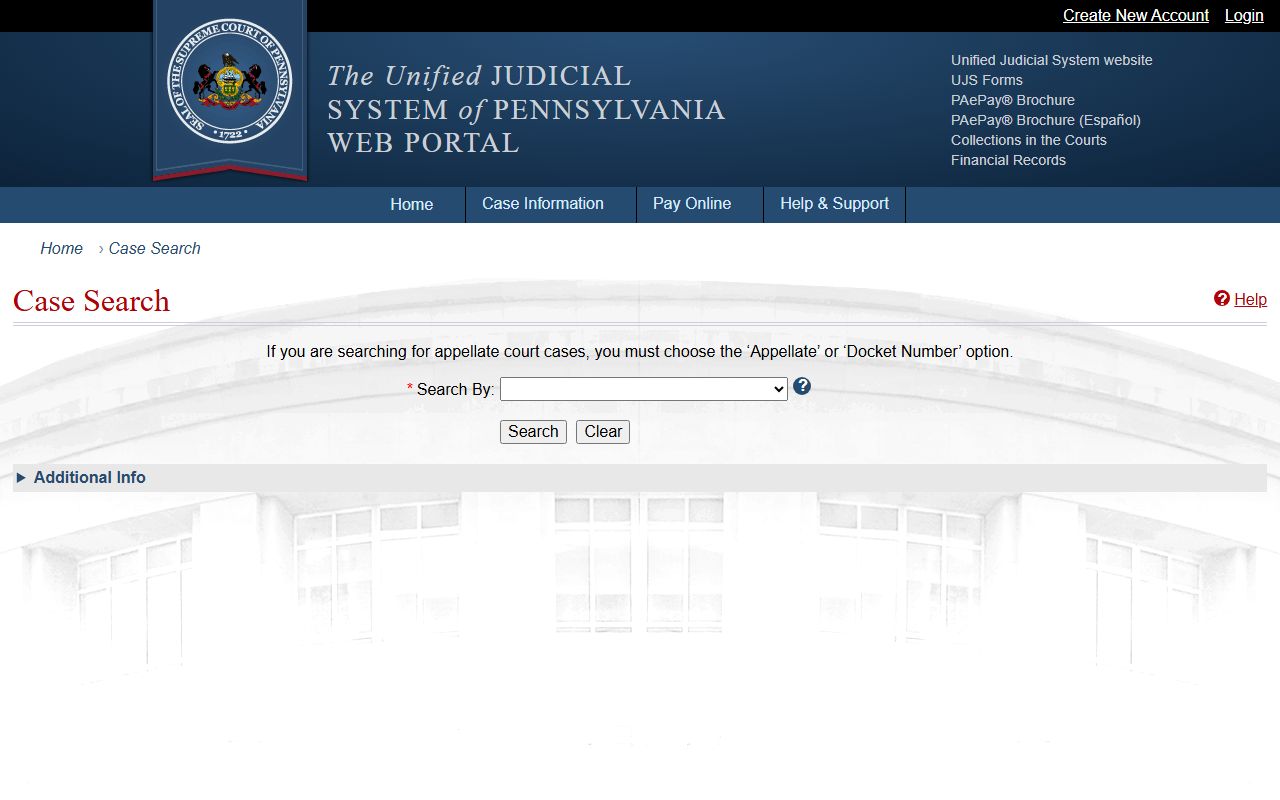
The Pennsylvania UJS Case Search Portal is the primary online tool for locating Erie County divorce records. The portal is free to use and requires no registration for basic searches. Erie County cases are indexed alongside all other Pennsylvania Courts of Common Pleas in the same system.
Filing for Divorce in Erie: Key Requirements
Pennsylvania law sets a clear residency threshold for divorce filings. Under 23 Pa. C.S. § 3104, at least one spouse must have been a Pennsylvania resident for six months before filing a divorce complaint. Erie County residents who meet this requirement may initiate their case at the Erie County Courthouse.
Pennsylvania recognizes no-fault and fault-based divorce grounds under 23 Pa. C.S. § 3301. No-fault divorce is by far the most common approach. Two paths exist. The first requires mutual consent from both spouses after a 90-day waiting period from the date of service. The second allows one spouse to file after a one-year separation period, even without the other's consent.
Fault-based grounds remain available under Pennsylvania law. These include willful desertion, cruel and barbarous treatment, bigamy, imprisonment, and adultery. Fault divorces are less common in practice but may affect alimony determinations or other related proceedings.
All procedural steps for Pennsylvania divorce actions are outlined in Chapter 1920 of the Pennsylvania Rules of Civil Procedure. These rules cover everything from the initial complaint to service of process, hearings, and the entry of a final decree. The Erie County Court follows these rules uniformly.
Erie Divorce Records: Property and Financial Matters
Pennsylvania uses equitable distribution for dividing marital property. The governing statute is 23 Pa. C.S. § 3502. Courts assess the length of the marriage, each spouse's income and earning potential, contributions to the marital estate, and other relevant factors. Equitable does not always mean equal. The Erie County Court of Common Pleas applies these standards to all divorce cases within its jurisdiction.
Alimony is a separate question governed by 23 Pa. C.S. § 3701. The court considers the standard of living established during the marriage, each party's earning capacity, and the duration of the marriage. Alimony is not automatic in Pennsylvania. It must be specifically requested, and the requesting party must demonstrate need.
Erie divorce cases involving pensions, real estate, or business assets can become particularly complex. Qualified Domestic Relations Orders (QDROs) may be needed to divide retirement accounts. These orders become part of the court record and are available through the Prothonotary's Office after the case concludes.
For the full text of Pennsylvania's family law statutes, the Pennsylvania Legislature website hosts Title 23 of the Pennsylvania Consolidated Statutes, which covers all domestic relations law including divorce, equitable distribution, and alimony.
Vital Records and Divorce Certificates in Erie
Two different systems document Pennsylvania divorces. The distinction matters depending on what you need.
The Pennsylvania Department of Health issues divorce certificates through the vital records system. These certificates confirm that a divorce occurred and provide basic information such as the parties' names, the county, and the date. They do not include detailed legal findings or property orders. To request a Pennsylvania divorce certificate, contact the Pennsylvania Department of Health vital records office. Out-of-state requests can reference the CDC NCHS guide for Pennsylvania vital records.
Court records are a separate system maintained at the county level. The Prothonotary's Office at the Erie County Courthouse holds the full divorce case files. These include every document filed in a case, from the original complaint through the final decree and any post-decree orders. Full court records are needed when reviewing specific terms of a settlement or decree.
The Pennsylvania Court Records divorce resource page provides general background on the divorce process, document types, and record access across Pennsylvania. Erie residents can use this as a starting point before contacting the Erie County Prothonotary or the UJS portal for case-specific information.
Public Access to Erie County Divorce Records
Pennsylvania supports broad public access to court records. The Right-to-Know Law under 65 P.S. § 67.101 is administered by the Pennsylvania Office of Open Records. Most divorce records filed in Erie County are accessible to the public, subject to any restrictions imposed by the court.
Restricted records are most common in cases involving minor children, sealed financial disclosures, or domestic violence allegations. When records are restricted, the Office of Open Records can provide guidance on how to submit a formal access request and what appeal options exist.
Standard access to Erie County Prothonotary records typically requires visiting the courthouse, presenting identification, and paying applicable copy fees. Some records may be accessible remotely by mail or through the UJS portal. Contact the Prothonotary's Office directly for current procedures and fees.
Legal Help for Erie Divorce Cases
Self-represented parties in Erie County have access to several support resources. The Erie County Courthouse may provide a self-help center or pro se forms for unrepresented litigants. Contact the court to confirm what assistance is currently available.
For residents who qualify based on income, PA Legal Aid provides free or low-cost legal services in family law matters. Erie County is served by legal aid organizations affiliated with the statewide PA Legal Aid network. Even a one-time consultation can help an unrepresented party understand the process and their rights under Pennsylvania's equitable distribution and alimony statutes.
The Pennsylvania Courts of Common Pleas directory lists contact information for each county court, including Erie. Reviewing this resource helps parties identify the correct office and confirm contact information before reaching out.
Note: Court staff can provide procedural information but cannot provide legal advice. For legal questions about your specific situation, consulting a licensed Pennsylvania attorney is the appropriate step.
Erie County Divorce Records
All divorce actions for Erie city residents are filed at the Erie County Courthouse through the Court of Common Pleas. The Prothonotary's Office maintains the complete record for every divorce case in Erie County. For certified copies, docket searches, and detailed case access, the county is the authoritative source for all Erie divorce records.
Nearby Pennsylvania Cities
Divorce records for other Pennsylvania cities are managed through their respective county court systems.