
Erie County Divorce Records and Court Filings
Erie County divorce records are maintained by the Prothonotary's Office at the Erie County Courthouse. The Court of Common Pleas handles all divorce proceedings in the county. Residents searching for divorce case information can access public court filings, docket entries, and related documents through official county and state channels. This guide covers how to locate and obtain Erie County divorce records, what information is available to the public, and where to direct specific requests about cases filed in this northwest Pennsylvania county.
Erie County Quick Facts
Erie County Divorce Records: Where They Are Kept
The Prothonotary's Office at the Erie County Courthouse in the city of Erie is the official repository for divorce case records. When a divorce is filed in Erie County, the Prothonotary receives and maintains all pleadings, orders, and final decrees associated with that case. These records are considered public court documents under Pennsylvania law, and most are accessible to anyone who submits a proper request.
Erie County operates under a Home Rule Charter, making it one of a limited number of Pennsylvania counties with this form of government. County Executive Christina Vogel leads county government. The Clerk of Records, Aubrea Hagerty-Haynes, oversees document management across several county offices. This structure differs from the traditional three-commissioner model used in most Pennsylvania counties, but divorce record access procedures remain consistent with state law and Pennsylvania Courts of Common Pleas guidelines.
Note: Marriage licenses in Erie County are handled by the Clerk of Orphan's Court, not the Prothonotary. These are separate offices, and requests for marriage records should be directed accordingly.
The Erie County official website provides resources on Open Government initiatives, including Right-to-Know requests. For a full overview of county services and offices, visit the Erie County official government website.
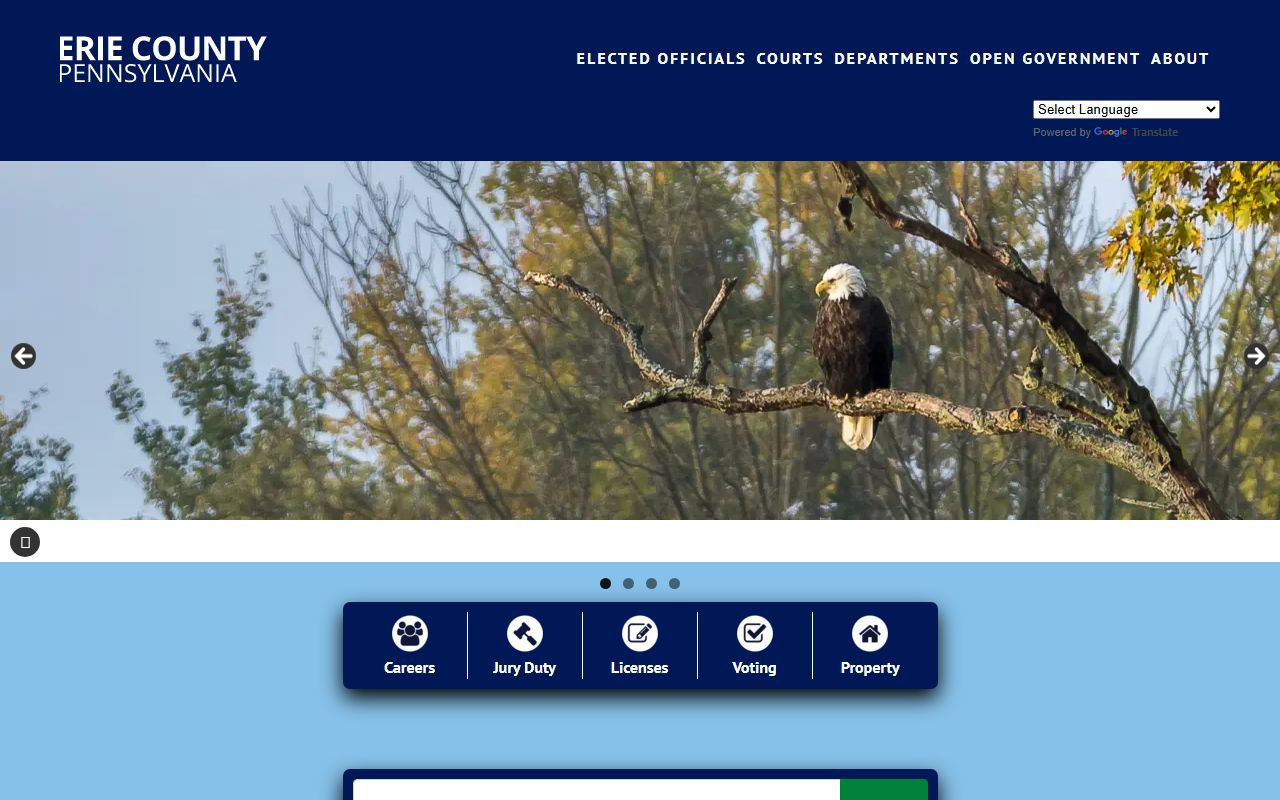
The Open Government portal provides transparency tools including open budget data, spending reports, and bid postings that illustrate Erie County's commitment to public access to government information.
How to Search Erie County Divorce Records Online
Pennsylvania's Unified Judicial System offers a statewide case search portal that includes Erie County Court of Common Pleas filings. The UJS Case Search portal allows anyone to search by party name, docket number, or filing date. Erie County divorce cases appear in this system once they are docketed by the Prothonotary. You can use this tool to find basic case information, hearing dates, and the status of a proceeding without visiting the courthouse in person.
For more detailed document retrieval, including copies of final divorce decrees or specific court orders, an in-person visit to the Prothonotary's Office or a written request may be necessary. The Erie County Courts website provides contact information for the relevant offices and guidance on submitting record requests.
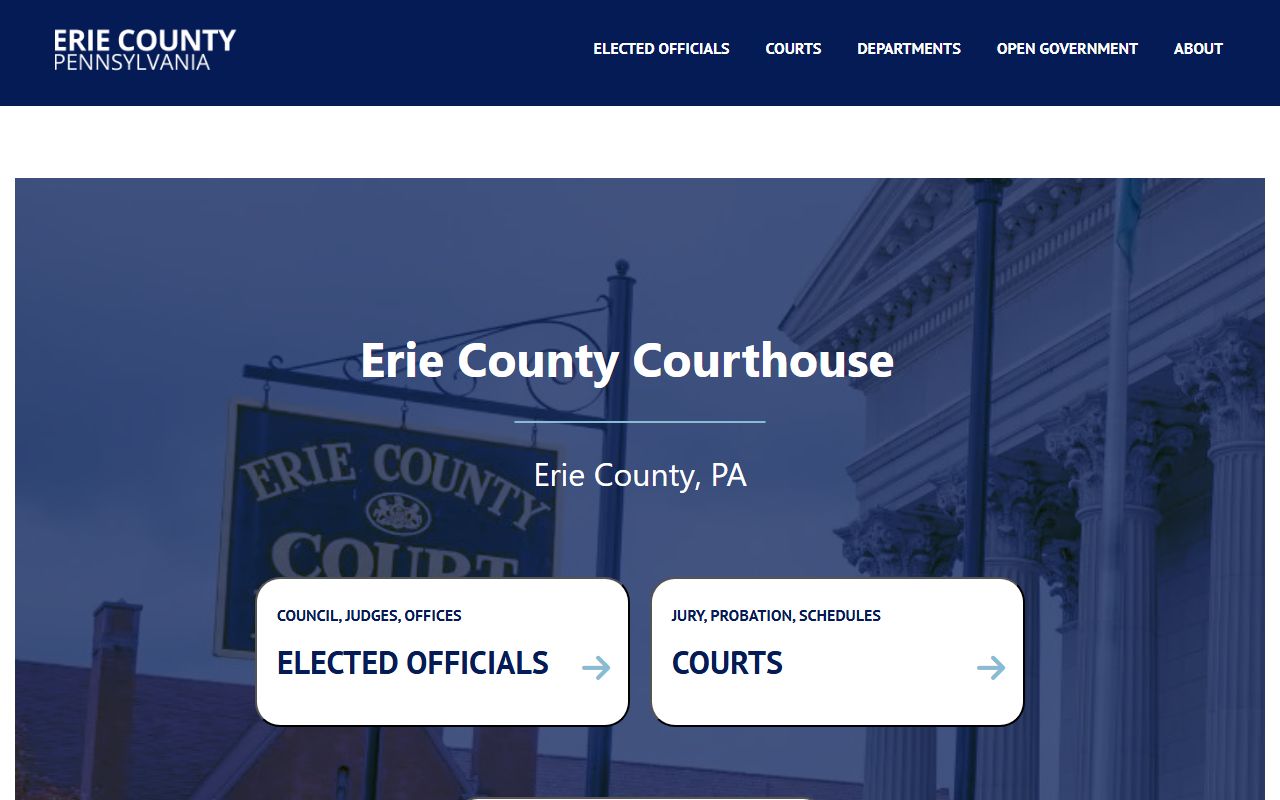
When using online search tools, search variations of the party names to account for name changes, spelling differences, or hyphenated surnames that may affect how a record appears in the system.
Note: The UJS portal is maintained by the Pennsylvania courts and is updated regularly, though minor delays between filing and online availability can occur.
Pennsylvania Divorce Law and Erie County Filings
All Erie County divorce proceedings follow Pennsylvania's Divorce Code. Under 23 Pa.C.S. § 3104, at least one spouse must have been a Pennsylvania resident for a minimum of six months before a divorce complaint can be filed. Erie County residents who meet this requirement may file in the Court of Common Pleas.
Grounds for divorce in Pennsylvania are defined by 23 Pa.C.S. § 3301. No-fault divorce is available in two forms. The first requires mutual consent of both parties, with a mandatory 90-day waiting period after the complaint is served. The second requires proof of a one-year separation without cohabitation. Fault-based grounds such as adultery, desertion, and cruel treatment are also available under the statute, though they are less commonly pursued. The Pennsylvania Code, Chapter 1920 governs the procedural rules that apply in Erie County divorce cases.
Property division in Erie County divorces follows the equitable distribution standard set out in 23 Pa.C.S. § 3502. Courts consider factors such as length of the marriage, each spouse's income and earning capacity, contributions to marital property, and the standard of living during the marriage. Equitable distribution does not necessarily mean equal; the court determines a fair allocation based on the specific circumstances of each case.
Alimony questions are governed by 23 Pa.C.S. § 3701, which outlines criteria judges use when deciding whether spousal support is appropriate and for how long. For those who need help navigating these rules, Pennsylvania Legal Aid offers resources and assistance to qualifying individuals throughout the state, including Erie County residents.
Vital Records and Divorce Certificates in Erie County
A final divorce decree issued by the Erie County Court of Common Pleas is the primary legal document confirming that a marriage has been dissolved. Certified copies of this decree are available through the Prothonotary's Office.
Pennsylvania's Department of Health maintains divorce records as vital statistics. The Pennsylvania Department of Health vital records page explains how to request a divorce certificate for cases filed in the state. The department relies on data reported from county courts, so there may be a processing lag between when a decree is entered and when the state record is updated.
The CDC National Center for Health Statistics also provides information on obtaining vital records from Pennsylvania, including divorce records. This resource is useful for individuals who need verification for federal purposes, such as Social Security applications or passport renewals.
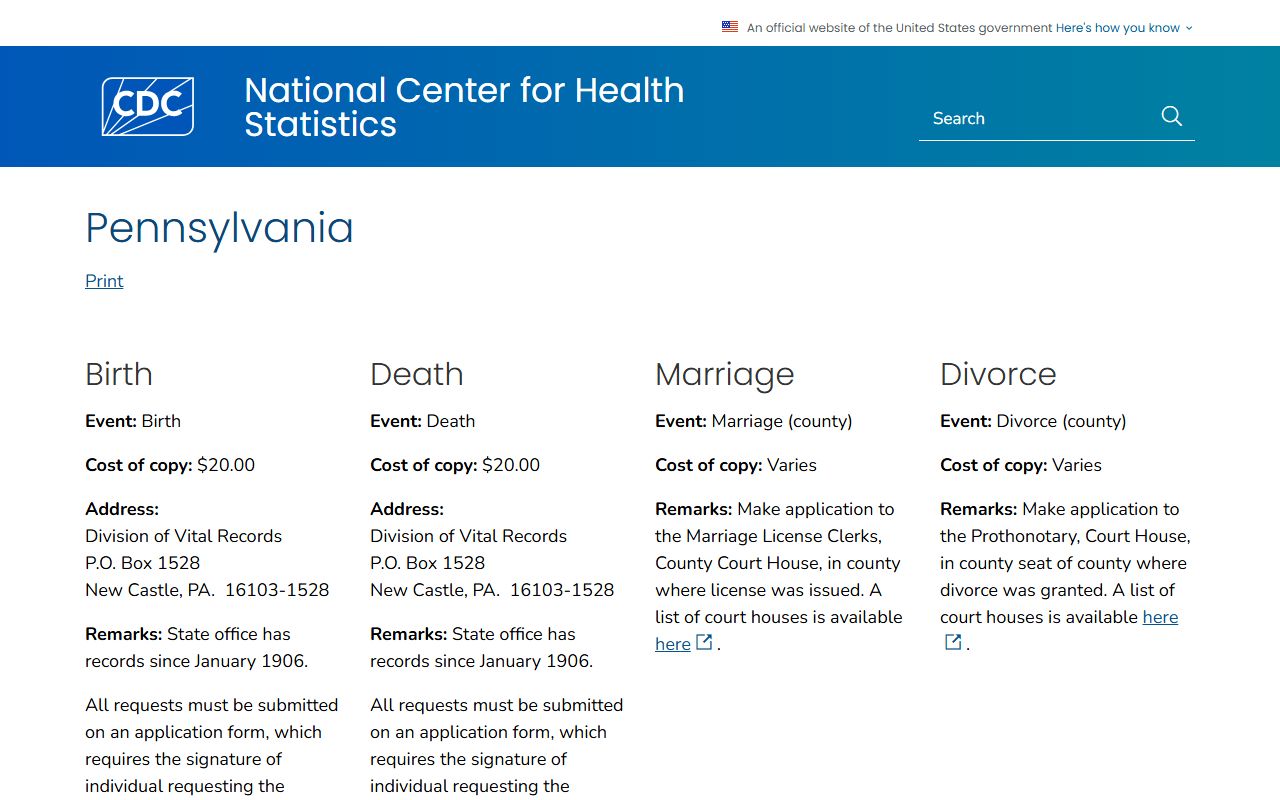
Always request a certified copy rather than a plain copy when you need the document for legal purposes, as many agencies require the court seal and signature to accept it as valid.
Note: If you need records predating the current docketing system, contact the Prothonotary directly, as older files may be archived and require additional lead time to retrieve.
Right-to-Know Requests for Erie County Divorce Records
Pennsylvania's Right-to-Know Law, codified at 65 P.S. § 67.101, gives the public the right to access government records, including court documents. However, court records are governed separately by the rules of the Unified Judicial System rather than the Right-to-Know Law. For most divorce records, the proper channel is a direct request to the Prothonotary rather than a formal Right-to-Know submission.
Erie County's Open Government initiative provides a framework for public records requests for non-judicial county documents. The Pennsylvania Office of Open Records oversees appeals and disputes related to Right-to-Know requests at the state and local level. If a request is denied, parties may appeal to this office for review.
Some divorce records may be sealed by court order. Records involving minor children, domestic violence, or sensitive financial disclosures can be restricted from public access. In those cases, only parties to the case or their authorized representatives can typically obtain copies. The Erie County Courts system follows the Pennsylvania court records access rules set by the Supreme Court of Pennsylvania.
Filing for Divorce in Erie County
To initiate a divorce in Erie County, the filing party submits a divorce complaint to the Prothonotary's Office along with the applicable filing fee. The standard filing fee is approximately $300, though this can vary based on the complexity of the case and any additional motions filed. Both parties must receive proper notice per Pennsylvania procedural rules.
Once filed, the case receives a docket number that can be used to track its progress through the UJS portal. Erie County's Court of Common Pleas assigns cases to judges in the Family Court division, who oversee proceedings related to property, support, and custody when children are involved.
The full statutory framework for Pennsylvania divorces is found in Title 23 of the Pennsylvania Consolidated Statutes, which covers the Domestic Relations law in its entirety. Reviewing the relevant provisions before filing can help parties understand their rights and obligations throughout the process.
Cities in Erie County
Erie County is home to the city of Erie, the county seat and the fourth-largest city in Pennsylvania. Erie sits on the southern shore of Lake Erie and serves as the region's hub for government, commerce, and healthcare. Beyond the city of Erie, the county includes numerous townships and boroughs such as Millcreek Township, Harborcreek Township, and the boroughs of Edinboro, Corry, and Girard. Each of these communities falls under the jurisdiction of the Erie County Court of Common Pleas for divorce filings and family court matters. Residents throughout the county direct their court filings to the Prothonotary's Office in the city of Erie regardless of which municipality they reside in.
Nearby Counties
Erie County borders Crawford and Warren counties in Pennsylvania, as well as portions of New York and Ohio to the north and west.