
Clinton County Divorce Records Search
Clinton County divorce records are maintained at the Clinton County Courthouse in Lock Haven, Pennsylvania. The Prothonotary's Office serves as the official custodian of civil court records, including all divorce cases filed with the Court of Common Pleas. Anyone can search for and obtain these public documents. Records include initial complaints, orders, settlement agreements, and final decrees. Whether you need records for legal purposes, personal verification, or research, understanding how access works in Clinton County will help you get what you need efficiently.
Clinton County Quick Facts
Clinton County Court of Common Pleas and Divorce Filings
Every divorce case in Clinton County goes through the Court of Common Pleas. This court is part of Pennsylvania's unified system of Courts of Common Pleas that exists in all 67 counties. The Prothonotary's Office receives, dockets, and archives all civil proceedings, including divorce. Each case receives a unique docket number, and that number serves as the primary identifier for locating records.
Lock Haven serves as both the county seat and the location of all Clinton County court offices. Because Clinton County is relatively small in population, the court operates on a more personal scale than larger urban counties. Staff at the Prothonotary's Office can generally assist visitors in person. Office hours and procedures can be confirmed by calling the courthouse directly before making the trip from outlying areas of the county.
Court records filed in Clinton County follow the same rules as all Pennsylvania Common Pleas courts. Divorce records are presumptively public unless sealed by judicial order.
Pennsylvania Divorce Law and Clinton County Proceedings
Understanding Pennsylvania's divorce statutes helps anyone navigating the Clinton County court system. Under 23 Pa.C.S. § 3104, at least one spouse must have lived in Pennsylvania for a minimum of six months before a divorce complaint can be filed. This residency requirement is a threshold that must be met regardless of the grounds for divorce being pursued.
Pennsylvania law under 23 Pa.C.S. § 3301 recognizes both no-fault and fault-based grounds. The no-fault route is by far the most common. It allows couples to divorce either through mutual consent, which requires a 90-day waiting period after the complaint is served, or through a showing of irretrievable breakdown of the marriage after one year of separation. Fault grounds, such as adultery, abandonment, or cruel treatment, are still available under the statute but are litigated less frequently in modern practice. The full text of Pennsylvania's domestic relations law is available through Title 23 of the Pennsylvania Consolidated Statutes.
More information on the divorce process is also available at Pennsylvania court records divorce resources.
Searching Clinton County Divorce Records Online
Pennsylvania's statewide case search system is the primary online tool for locating Clinton County divorce records. The UJS Case Search portal is free and publicly available around the clock.
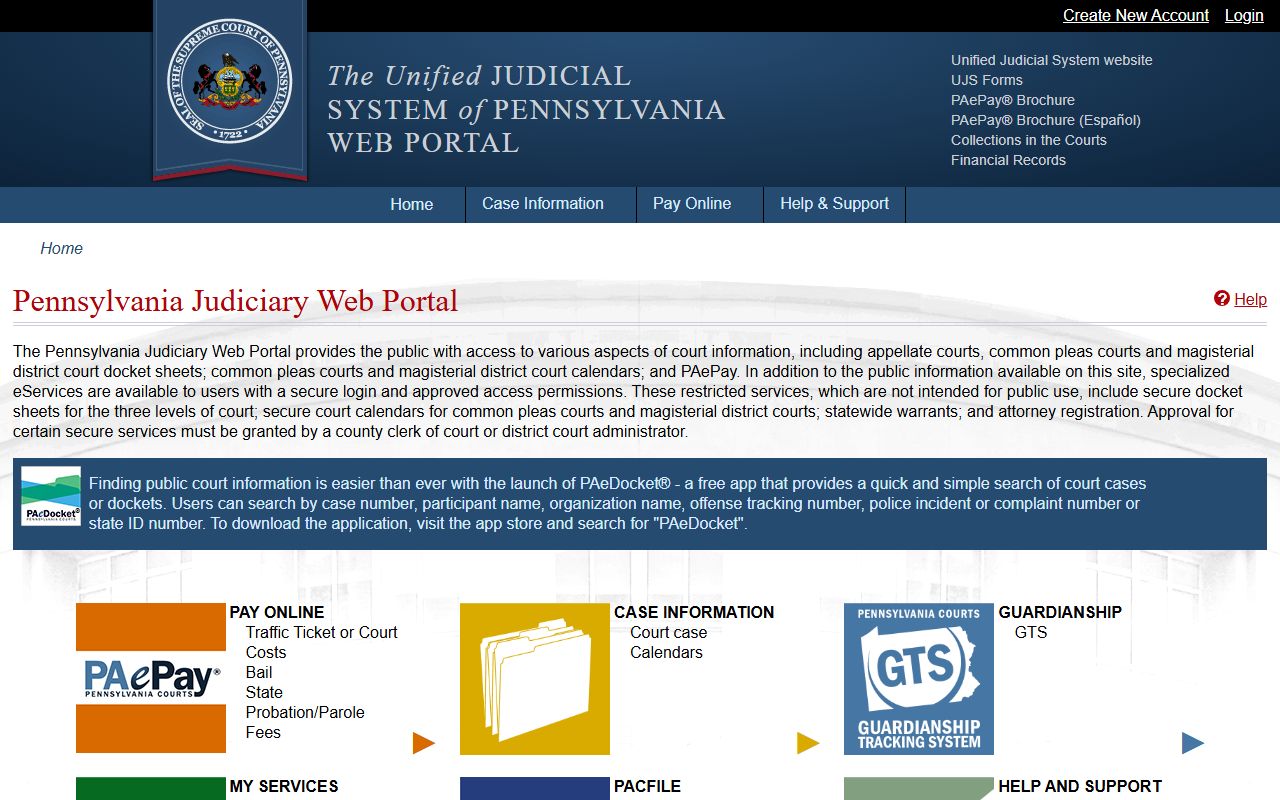
The portal allows searches by name or docket number and returns basic case information including party names, filing dates, docket entries, and case status for cases filed in Clinton County.
Not every document in a case file is viewable through the online portal. Detailed filings such as financial affidavits, property settlement agreements, and final divorce decrees often require a visit to the courthouse or a formal copy request submitted to the Prothonotary. The UJS portal is most useful for confirming that a case exists, identifying the docket number, and reviewing the procedural history of the case.
Researchers and individuals who cannot visit Lock Haven in person can often submit copy requests by mail. Including the docket number, full party names, and the approximate filing year speeds up processing considerably.
Note: Online records may not reflect the most recent filings, as there can be a short delay between when documents are submitted and when they appear in the portal.
Property and Financial Matters in Clinton County Divorce Cases
Contested divorces in Clinton County frequently involve disputes over property division and financial support. Pennsylvania uses equitable distribution principles to divide marital assets. Under 23 Pa.C.S. § 3502, the court considers a wide range of factors, including the length of the marriage, each spouse's income and economic circumstances, contributions to marital property, and any prior marriages. The goal is a fair outcome rather than a mathematically equal split.
Alimony is addressed separately under 23 Pa.C.S. § 3701. Courts may award alimony when one spouse does not have sufficient income to maintain a reasonable standard of living following the divorce. The amount and duration of alimony are determined based on multiple factors, including the relative earnings of the parties, the health and age of each spouse, and the standard of living established during the marriage. All orders related to property division and alimony become part of the permanent Clinton County court record.
Obtaining Certified Divorce Documents from Clinton County
Certified copies of divorce decrees serve many practical purposes. Banks, insurance companies, government agencies, and courts in other jurisdictions may require certified documentation of a prior divorce before taking certain actions. The Clinton County Prothonotary issues certified copies for a standard fee per page. Requests should include the full names of both parties, approximate filing year, and docket number if available.
The Pennsylvania Department of Health maintains a separate vital records system that includes divorce verification letters for cases filed in Pennsylvania since record-keeping requirements were established statewide. This can supplement but does not replace a court-certified copy from the Prothonotary. For most official purposes, the Prothonotary's certified copy is the document that carries the legal authority needed.
Pennsylvania residents who need assistance understanding the records process or have questions about their legal rights in divorce proceedings can contact Pennsylvania Legal Aid for free guidance.
Right-to-Know and Public Access to Clinton County Records
Pennsylvania's Right-to-Know Law at 65 P.S. § 67.101 guarantees broad public access to government records. Court records, including those maintained by the Clinton County Prothonotary, are public by default. Certain sensitive information, such as Social Security numbers, financial account details, and information involving minor children, may be redacted before public access is granted. Pennsylvania Rules of Civil Procedure govern how this redaction occurs.
The Pennsylvania Office of Open Records provides resources explaining how citizens can access public documents and what to do if a records request is denied or improperly limited. For divorce records specifically, the best starting point is always the Prothonotary's Office at the courthouse where the case was filed. If access issues arise, the Office of Open Records can provide guidance on appeal processes and legal rights under state law.
The Pennsylvania Rules of Civil Procedure Chapter 1920 governs the procedural rules for divorce actions specifically and is a valuable reference for understanding how cases proceed through the court system.
Vital Statistics and Clinton County Divorce Data
Divorce statistics for Clinton County are compiled at the state level and contribute to national data collections. The CDC's Pennsylvania vital records information page explains how Pennsylvania participates in national vital statistics reporting.
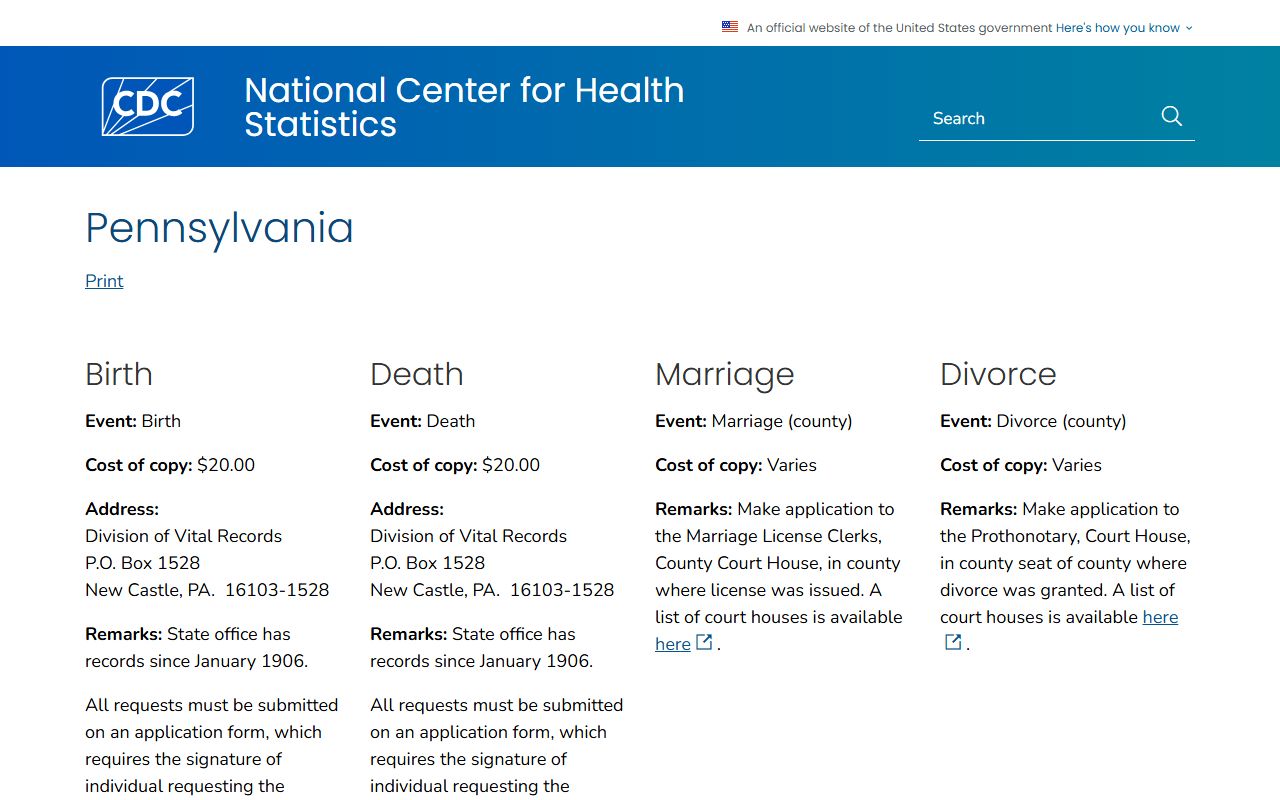
These compilations draw on data from county-level court systems, making the Clinton County Prothonotary's records an important link in the statewide data chain.
For individuals seeking their own divorce records rather than aggregate statistics, the Prothonotary remains the direct source. The CDC and state health department data are most useful for researchers studying demographic trends across Pennsylvania's rural counties, of which Clinton is a notable example.
Cities in Clinton County
Clinton County's county seat is Lock Haven, home to the courthouse and all central county offices. Other communities in the county include Renovo, Mill Hall, Flemington, and Avis. The county is largely rural, bordered by state forests and mountain ridges that characterize north-central Pennsylvania. Most divorce proceedings for residents throughout the county are handled centrally in Lock Haven, making that city the hub of all court activity for the region.
Nearby Counties
Clinton County shares borders with several Pennsylvania counties, each maintaining its own Court of Common Pleas for divorce records.