
Juniata County Divorce Records
Juniata County divorce records are kept by the Prothonotary's Office at the county courthouse in Mifflintown. All divorce proceedings filed with the Juniata County Court of Common Pleas are part of the public court record. Residents looking for divorce filings, decrees, or case docket information have several options for locating these documents. This guide walks through the primary resources available for searching Juniata County divorce cases and understanding how Pennsylvania divorce law applies to local filers.
Juniata County Quick Facts
The Juniata County Prothonotary and Divorce Records
The Prothonotary's Office in Mifflintown is where all civil court filings in Juniata County are managed. This includes divorce cases filed with the Court of Common Pleas. When a divorce action is initiated, the Prothonotary assigns a docket number and maintains the case file throughout the proceedings. Every document submitted to the court becomes part of that official record.
Juniata County is one of Pennsylvania's smaller counties by population, serving a rural community centered along the Juniata River valley. Despite its size, the county maintains a fully functioning Court of Common Pleas with jurisdiction over all family law matters, including divorce, support, and equitable distribution of marital assets.
The Pennsylvania Unified Judicial System portal allows anyone to search court dockets from all 67 Pennsylvania counties, including Juniata. Entering a party's name or a known docket number will pull up available case information. This is often the fastest starting point for remote searches.
Note: Very old records may not appear in digital systems. Contact the Prothonotary's Office directly for records predating electronic filing.
Searching Juniata County Divorce Records Through the UJS Portal
The UJS Case Search tool is the primary online resource for locating Juniata County divorce cases. The tool is publicly accessible and does not require an account or login. Searches can be run by the full or partial name of either party to the divorce, or by the specific docket number if already known.
Search results will typically show the docket number, the names of the parties, the filing date, and the current status of the case. From there, users can often view the docket sheet, which lists each document filed and each action taken by the court in chronological order.
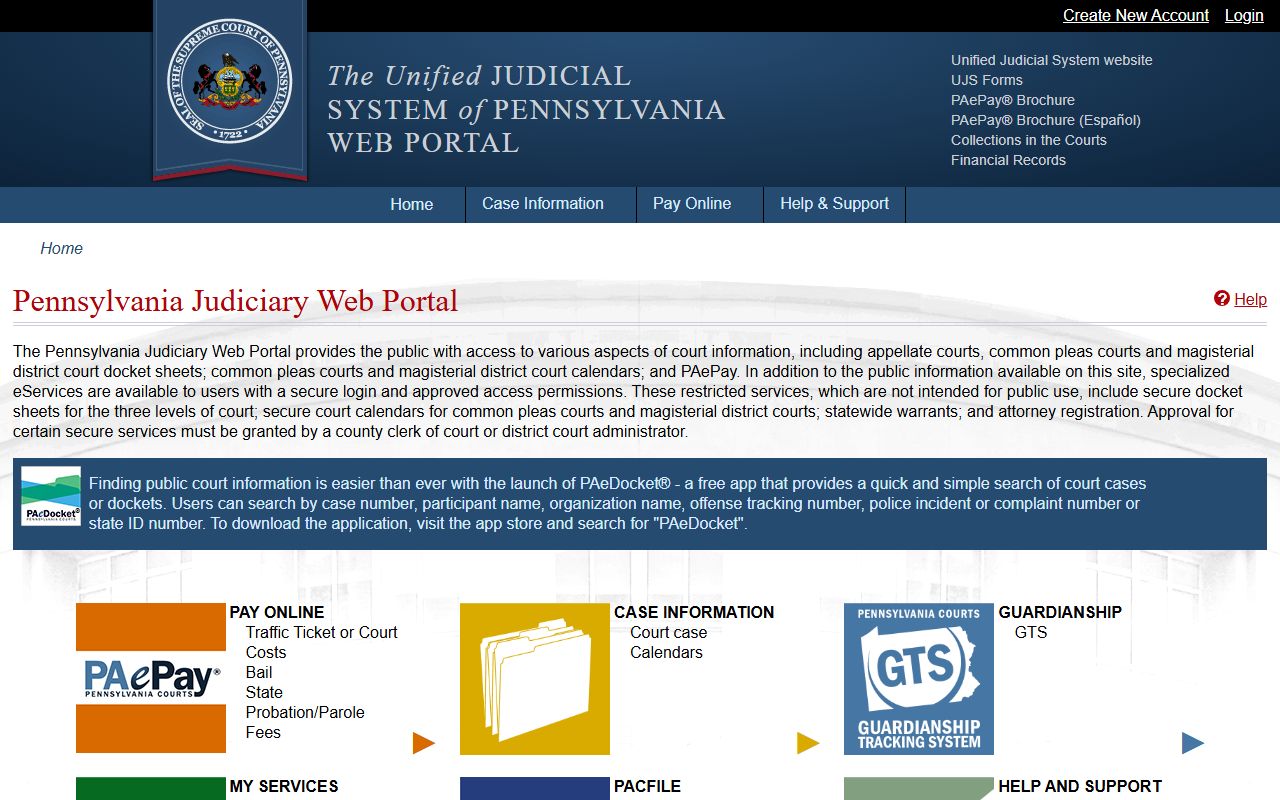
The UJS system links directly to the Pennsylvania Courts of Common Pleas structure. Juniata County's Court of Common Pleas is part of the state's unified court system, and its records are included in the statewide database maintained by the Administrative Office of Pennsylvania Courts.
For documents beyond what the online portal provides, visit the Prothonotary's Office in Mifflintown. Staff can locate files by party name, docket number, or approximate filing date. Copy fees may apply for paper documents or certified copies of decrees.
Pennsylvania Divorce Law and Juniata County Filings
Every divorce filed in Juniata County must comply with Pennsylvania state law. Title 23 of the Pennsylvania Consolidated Statutes sets out the rules that govern all divorce proceedings in the Commonwealth, and the same rules apply whether you are filing in Mifflintown or Philadelphia.
Residency is required. Under 23 Pa.C.S. § 3104, at least one spouse must have resided in Pennsylvania for six months before filing. Juniata County residents who meet this requirement can file at the local courthouse.
The grounds for divorce in Pennsylvania are established under 23 Pa.C.S. § 3301. No-fault divorce is the most common approach. It can be obtained either through mutual consent, with both spouses signing affidavits after a 90-day waiting period, or through a claim of irretrievable breakdown after one year of separation. Fault-based grounds, including adultery, abandonment, and cruel treatment, remain available but are less frequently pursued. Procedural rules are found in Chapter 1920 of the Pennsylvania Code.
Once grounds are established, the court addresses property division under 23 Pa.C.S. § 3502, which requires equitable distribution of marital assets. Equitable does not mean equal; judges consider factors like the length of the marriage and each spouse's financial situation. Alimony is handled under 23 Pa.C.S. § 3701. The full statute is available at the Pennsylvania Legislature's website.
Note: This content is for informational purposes only. For legal advice, contact a Pennsylvania-licensed attorney or reach out to Pennsylvania Legal Aid.
What Documents Are Included in Juniata County Divorce Records
A Juniata County divorce file is a collection of all documents submitted to the court in connection with a particular case. The contents vary depending on whether the divorce was contested or uncontested, and whether ancillary issues like property division or support were part of the proceeding.
Typical documents in a divorce file include:
- The divorce complaint, which initiates the proceeding and identifies the grounds claimed
- Proof of service confirming the complaint was delivered to the opposing party
- Affidavits of consent or separation, depending on the type of no-fault divorce pursued
- Any motions or petitions filed during the case
- A property settlement agreement if the parties resolved financial matters privately
- The final divorce decree signed by the presiding judge
The decree is the most commonly requested document. It is the official court order that legally ends the marriage. Certified copies are available through the Prothonotary and are often required for legal name changes, remarriage, or updating financial accounts.
Public Access and Right-to-Know in Juniata County
Divorce records in Pennsylvania are generally part of the public court record. Pennsylvania's Right-to-Know Law, at 65 P.S. § 67.101, confirms the public's right to access government records. This includes most documents in a divorce case file, though certain sensitive materials may be restricted by court order.
A sealed record, a confidential financial affidavit, or documents related to minor children may not be available for public inspection. When requesting access to records, the Prothonotary's Office can advise on what is available and what requires a formal petition to the court.
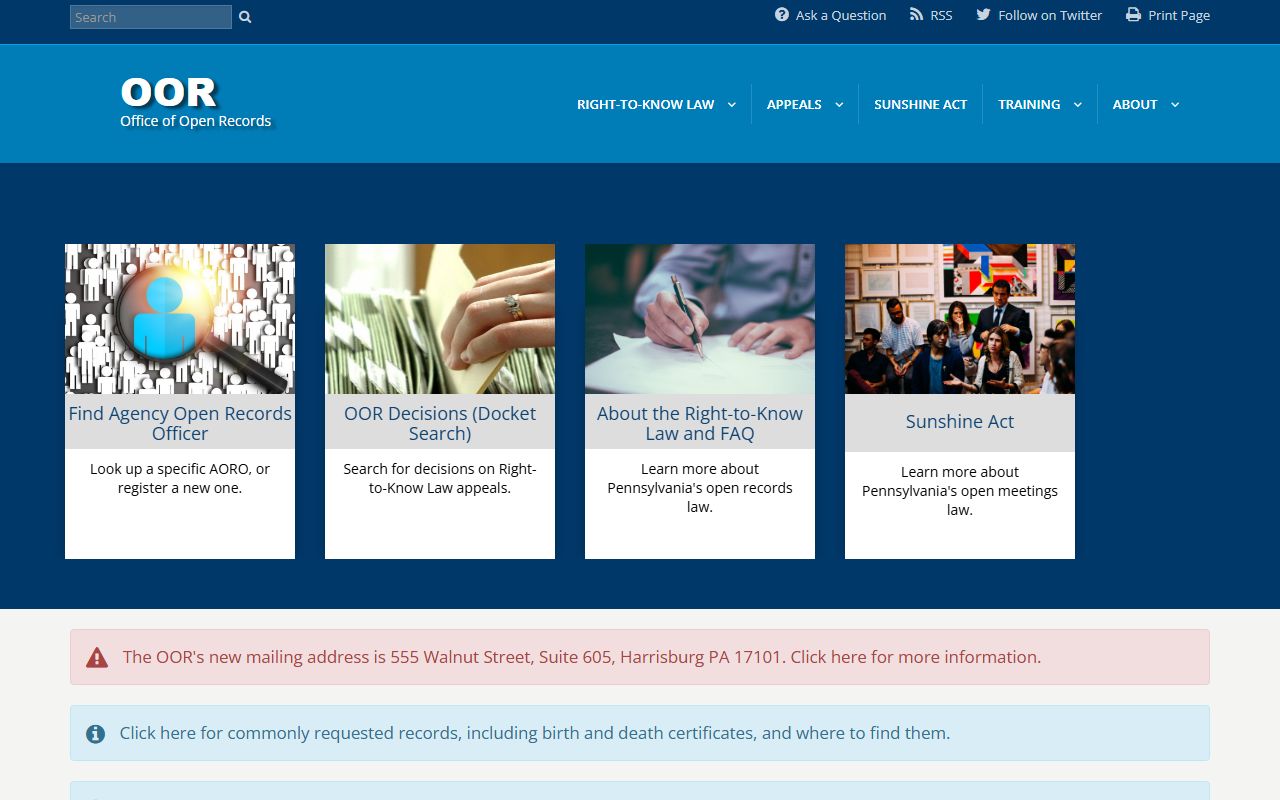
The Pennsylvania Office of Open Records administers the Right-to-Know Law and can provide guidance on how it applies to specific record requests. For vital record certificates separate from court filings, the Pennsylvania Department of Health manages divorce certificate data for statistical purposes.
Additional background on how Pennsylvania divorce records are compiled and tracked at the state level is available at the CDC's Pennsylvania vital records page.
Note: Court records and vital records serve different purposes. A divorce decree from the courthouse and a divorce certificate from the health department are separate documents.
Family Court Services in Juniata County
The Juniata County Court of Common Pleas handles all family law matters. Divorce is one category; the court also manages child custody, support, protection from abuse, and adoption. All of these case types generate court records maintained by the Prothonotary.
For residents navigating the divorce process, resources are available through the state court system and legal aid organizations. The Pennsylvania Court Records divorce page provides a general overview of how divorce records are structured and where to find them across the state. Local legal help may also be available through Pennsylvania Legal Aid for those who qualify based on income.
Juniata County's rural character and small population mean that courthouse staff are often accessible and willing to assist with record requests. Calling ahead to confirm office hours and current procedures is advisable before making an in-person visit to Mifflintown.
Cities in Juniata County
Juniata County is a small, rural county in central Pennsylvania. Mifflintown serves as the county seat and is the home of county government, including the courthouse where divorce records are filed and maintained. Port Royal, Mexico, and Thompsontown are among the other small communities within the county. The Juniata River runs through the region, shaping the geography of the communities that line its banks. Residents from all parts of Juniata County file divorce cases with the Court of Common Pleas located in Mifflintown.
Nearby Counties
Juniata County borders several neighboring Pennsylvania counties, each with its own Court of Common Pleas for divorce proceedings.